All the trees are in full bloom early this year and the plants and fruit trees are being pollinated by the wind, butterflies, bees and other insects.
So what happens when there is a cold snap?
Well, depending on how cold it gets, the temperature may determine how much fruit is produced this year.
When the trees and plants flower they produce nectar which attracts bees and other insect. Pollen clings to the insects gathering nectar and when they fly from flower to flower the stigma receives the pollen.
Once the plants are pollinated the petals will fall away and the stem that the flower was attached to will begin to swell, eventually producing a fruit. If the flowers bloom and then there is a sudden cold snap, the flowers fall away before the process of fertilization is complete.
This is one of the main reasons here in the Rocky Mountain region we rarely get apricots. Apricot trees are one of the first to bloom in the early spring.
Often, there is a cold snap that happens soon after those first really nice, warm days. This year is unusual in the way all the trees have already flowered in March, blossoms that we would not normally see until the middle of May are already blooming.
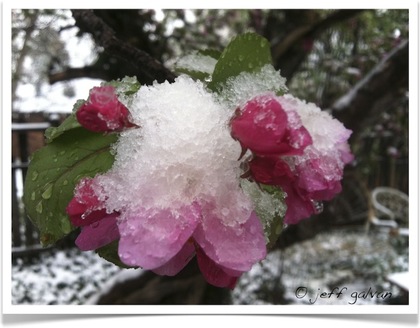
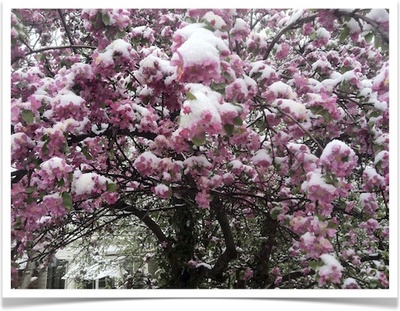
The photos above are from a crabapple tree in our backyard. You definitely want to check out what happened to those apples.
Boulder Tree Care is committed to helping you care for your trees by providing articles that cover lessons we are learning daily while providing tree care in Boulder, Colorado.
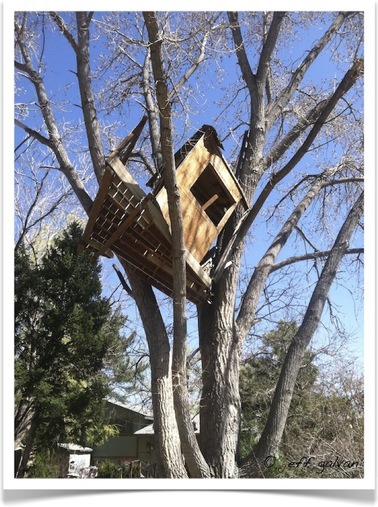
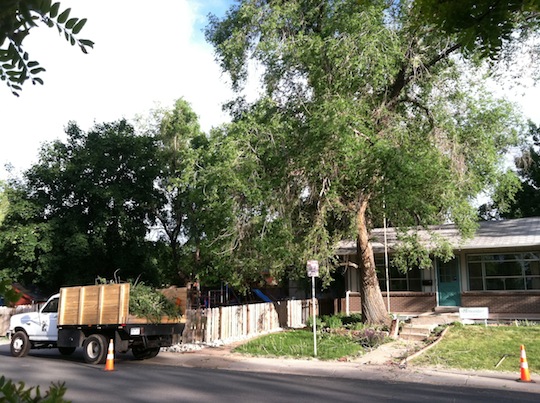
The owner wants us to remove this tree house from an old cottonwood on his property. Look at this thing.
It’s wedged in there real tight from the wind opening and closing the branches and the tree house falling deeper and deeper in there.
The back half pulled of it’s support and fell down while the front is still anchor bolted on the other branches. They said the racoons moved in for a while before it completely fell apart.
Working out the details on the bid. Intense tree house removal job!
Super dangerous with all the tension and stress from the bolts, cabling, the house and the the tree. What do you think? How much would you charge to remove this beast?
Spring is here and you may want to prune back your trees before all their leaves fill out.
Your trees will be happy if we get that heavy, wet April snow.
By thinning the canopy the snow will not accumulate as much on the leaves and branches and they will be less likely to break.
Early spring and late fall is when we get most our emergency calls. Usually, in the spring, it’s because we get a late snow after leaves have already filled out and in the fall we often get an early snow before trees have had a chance to drop their leaves.
Yes, we provide tree service for Boulder, Colorado. Did you know we also serve Longmont, Louisville, Erie, Broomfield, Gunbarrel and Lafayette areas?
Want to know more about your trees? Call us and request a free consultation and estimate with an ISA Certified Arborist. Since we are locally owned and operated, we are familiar with and have an understanding of the unique characteristics of species growing in the Boulder County area. We service both residential and commercial clients.
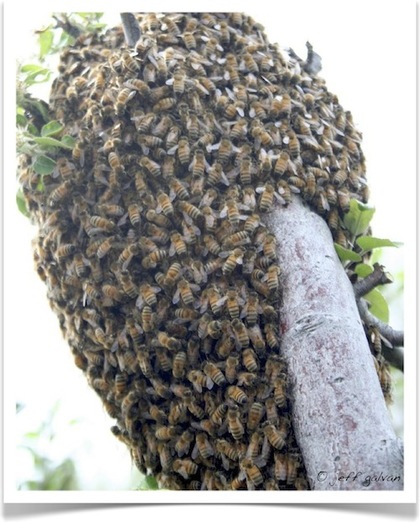
Spring is officially here and soon honey bees will begin to swarm. We catch bee swarms if you happen to see one! Here’s a picture of one we caught a couple years ago.
Just last week in April 2016 we were working on a tree down the street from our house when a bee hive on the property swarmed into an apple tree across the street. The swarm was captured and installed in another hive shorty after.
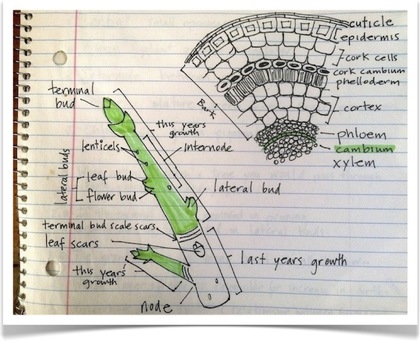
Xylem – this is the what we call the woody part of the tree. It has cells that are alive and no longer alive. It’s primary functions are to conduct (sapwood) dissolved nutrients and water from the roots upward and also helps to form the woody element in the stem creating the physical structure of trees. It also stores food in the form of carbohydrates.
Phloem – is what grows around the wood. It is vascular tissue and it moves the carbs other metabolic products down the trunk form the leaves and the old phloem makes up the outer protection (bark) of the branches and trunk.
Roots need moisture and oxygen to grow. they are what conduct, store food, in the form of carbohydrates and anchor the tree in the ground. Also, the little ones absorb dissolved minerals and water. Fungus often lives in a symbiotic relationship with the roots of a trees and plants. This connection is what we call mycorrhizae.
For the most part leaves are the organs of transpiration and the process plants use sunlight to make food from water and carbon dioxide (photosynthesis). This process produces oxygen.
these articles are being updated when time allows so it will be continued..
We create safe working zones to help protect you, your property and our workers use professional Personal Protective Equipment (PPE) to help minimize the chances of any injuries .
From our climbing equipment and chainsaws to our chippers and stump grinders, we maintain and inspects our equipment daily. This helps to insure the highest standards of a safe working environment.
Have a tree that needs trimming? Would like to plant a new one or do you need to remove a hazardous tree or branch? Depending why you are in need tree service, finding a tree care company that can accurately identify, diagnose and improve the health of your trees may prove challenging.
Here are few suggestions to make the process a little easier and help you find a great tree care company.
Get a few estimates from some tree service companies. Usually, there is no cost to get an estimate to determine what services your trees will need. Planning ahead and taking the time to get a couple or more opinions, unless you have a hazardous tree, is often well worth the wait.
Why? It gives you an idea about the services different tree care professionals recommend, the average cost of the tree care needed and you’ll meet some of the tree surgeons who will be working on your property. Although, it is common in the tree business to have a tree estimator who is different than the person who will be working with and sometimes in your trees.
Choose a local certified arborist. Different trees have different needs. Select someone who knows how to identify trees, is familiar with the specific types of trees on your property and has experience with their qualities. For example; some trees have a very thin outer bark and climbing them or using ropes without friction savers may cause damage to your tree.
When planning to build a new home or doing a major renovation of an old one, where there are trees that you would like to preserve, contact a certified arborist in the early planning stages. This way you can set up protection zones and inform construction workers to protect the trees you want to keep.
Recently, I was called to remove a tree that was on a construction site. I refused to cut down a beautiful 100+ year old tree in perfect health. It was in my opinion the tree was the most valuable asset on the property. The reason they needed to cut down the tree was because they did not plan on saving the tree. Later, after the tree was removed, they admitted to never wanting to cut the old tree down.
Check to see if the company or individual is fully licensed and insured before starting work on your property.
Be informed. You’ll be at more of an advantage than if you haven’t done your homework. One of my favorite things is when I go to meet a person about their trees and they already know what types of trees live on their property and have an understand their basic needs and characteristics. While not everyone will be able to do this there are few things you can do to give yourself an advantage. It doesn’t take much time to go n line and read a little about the tree service or watch a video. This will prepare you for the next tip…..
Ask questions. a few questioned can go a long ways. It gives you an opportunity to demonstrate that the well being of your trees is important to you.
Does this tree appear to be healthy and safe? Do you know what species of tree this is? What are some of the common problems or pest associated with this type of tree? Does my tree need water in the winter? When is the best time of year to prune this tree? How long have you been caring for trees in this area and do you have any experience with working this type tree?