Properly pruning and cultivating fruit trees requires experience that is different than when caring for ornamental shade trees. Here are some specific considerations for both planting and caring for fruit trees.
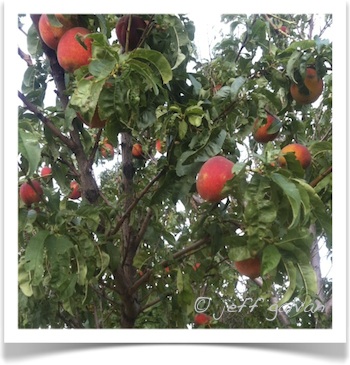
Overall height of the crown
The height of the tree will determine the level of difficulty when it comes to harvesting the fruit. Do want to be reaching over on a 16′ ladder picking apples or cherries?
Branch strength and the weight of the fruits
The structural integrity is an important factor when it comes to the weight of the fruit a tree is producing. A tree must be able to handle the weight of fruit while minimizing the chances of branch failures. Snow may also accumulate on late fruiting trees, such as apples, adding considerably to the overall weight a tree must support.
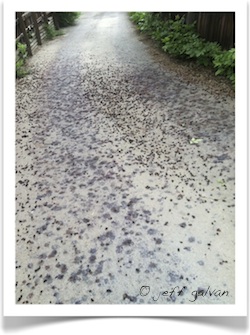
Considering location is important when planting
Fruit not harvested falls.Therefore, the type of fruit trees and location can determine if a tree is an asset or a liability. As with any tree, a fruit tree planted in the wrong location can be a real problem. We have a large mulberry tree in our backyard that creates a lot of berries. On a bumper crop year it produces several thousand berries more than we have time to harvest. By the end of the season the driveway, walking paths and rooftops are completely covered and stained purple from the juice of the berries. Wouldn’t change having the tree for anything, but in hindsight it would have been nice if it had been planted further back in the yard.
Birds and other Animals
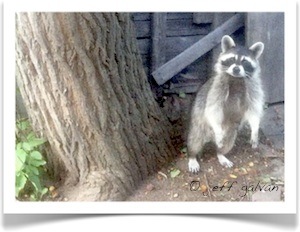
The raccoon, birds, squirrels and deer visit every day and night to eat the abundant fruit that grows in our yard. The racoon, squirrels and the bluejays make the most noise. This year there were several animal families living in the yard. Including, 7 racoon, 5 bluejays, half a dozen deer (including the birth of two spotted fawns) and countless squirrels. The racoon would climb all over our roof in the middle of the night. Often we could see them walking across our skylights. My daughter and I would go to the kitchen window every night during the summer to watch the baby racoon gather and eat the mulberries and apricots that had fallen. She has grown up with all of these animals and thinks it is completely normal.
Insects and invasive pest
Fruit trees attract many different types of additional pest that shade trees usually don’t. For example, wasp and hornets, ants, earwigs and the noisy bluejays all love to visit and eat the fruit.
When is a Good Time to Prune Fruit Trees?
Reducing the risk of transmitting diseases is critical for the longevity of fruit trees. Therefore, we strongly recommended pruning fruit trees in the winter months. This is when they are completely dormant. However, if there is a specific problem to address we do make exceptions and find alternative times to prune them.
Boulder Tree Care’s certified arborist is experienced pruning fruit trees. Trimming for our clients here in Boulder, Colorado, as well as, professionally on orchards in Washington, Oregon and sunny California.